Have you ever been talking to someone in a crowded room when another conversation suddenly catches your attention?
Maybe you hear your name. Someone mentions something interesting. Or an announcement comes over the speakers that you need to hear.
For a moment, you seem to be aware of both conversations. We tend to think attention works like a switch. You’re listening to one person, something else catches your attention, and your brain moves from one to the other.
But new research suggests the handover isn’t quite that clean. For a brief moment, your brain may actually be holding onto one conversation while beginning to process another. Attention doesn’t switch like a light. It crossfades.
Your Brain Doesn’t Let Go Straight Away
Researchers recently asked people to listen to two competing speakers against background crowd noise while measuring their brain activity with EEG. Every 15 to 30 seconds, participants were instructed to shift their attention from one speaker to the other.
What happened during that transition was fascinating.
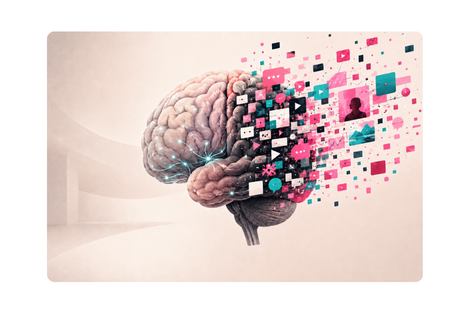
The brain began tracking the new speaker before it had fully disengaged from the previous one. For a brief period, roughly one to two seconds, representations of both speech streams overlapped. Instead of dropping one conversation and then picking up the next, the brain appeared to create a temporary bridge between them.
Think of two songs being mixed by a DJ. One doesn’t abruptly stop before the next begins. For a moment, both are playing while one fades out and the other becomes dominant. Our auditory attention may be doing something remarkably similar.
Switching Requires Work
The study also found something interesting.
During this transition, researchers observed changes in brain activity linked to the effort of reallocating attention. That matters because we often think about distraction in terms of what interrupted us.
The conversation across the room distracted me. Someone calling my name distracted me. The noise distracted me. But the interruption may only be part of the story. Your brain then has to decide what deserves attention, start processing the new stream, disengage from the old one, and build enough context to understand what’s being said now.
The shift itself requires work. And once you start thinking about attention that way, some very ordinary experiences begin to make more sense.
Why Some Environments Feel So Exhausting
Think about a busy restaurant.
You’re following the person sitting opposite you while music is playing, plates are clattering, a waiter is speaking at the next table, and several other conversations are happening within earshot. Your brain is constantly deciding what matters and what doesn’t. Most of the time, it does this so effectively that you barely notice. But if you’ve ever left a noisy dinner feeling strangely exhausted, you’ve probably experienced just how much effort listening can require.
The researchers behind the study suggest their findings may help us better understand why busy listening environments can be particularly demanding for older adults and people with hearing difficulties. And they also reveal something interesting about the rest of us. Attention isn’t simply about whether we can focus. It’s also about how efficiently we can navigate everything competing for that focus.
Some People May Be Better at the Handover
We’ve all met someone who seems unusually good at navigating a crowded room. They’re talking to you, somehow notice something interesting happening nearby, briefly tune into it and then return without appearing to have missed much of your conversation.
It can look like they’re better at multitasking. The researchers suggest there may be more to it. The ability to briefly track competing speech streams appears to vary between individuals, which could help explain why some people are particularly good at navigating complex social environments.
That’s an important distinction.
Being good at shifting attention doesn’t necessarily mean sustaining full attention on two conversations indefinitely. The study instead points to a short transition period in which the brain can maintain information from one stream while beginning to engage with another.
In other words, what looks like multitasking may sometimes be very efficient switching.
Now Think About Your Working Day
The study examined spoken conversations, not emails, Slack messages or smartphone notifications. But it raises an interesting question about how we think about attention more broadly.
How many times does your focus move during an ordinary hour?
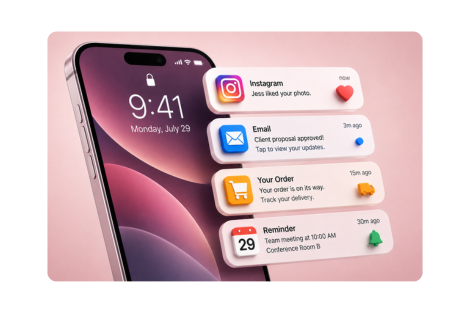
You’re writing a proposal and an email arrives. You read it, return to the proposal, then your phone lights up. A colleague asks a question. You go back to the document and try to remember exactly where you were. We usually count the interruptions. One email. One message. One conversation.
But perhaps that’s not the only thing worth counting. Every interruption can also create a transition. And transitions require the brain to work out what matters now, what it was doing before and where its attention needs to go next. That means a day filled with small interruptions isn’t simply a day with less time to focus. It’s a day with more switching.
The Problem Isn’t Always Your Ability to Concentrate
When people struggle to focus, we often make it a personal failure. We tell ourselves we need more discipline, that we should concentrate harder or that we need to stop getting distracted. But attention doesn’t exist independently of the environment around us.
If your day constantly asks your brain to move from one stream of information to another, concentrating harder may not solve the underlying problem. Sometimes the more useful question is whether all those switches are necessary in the first place.
Do you need every notification immediately? Does every message require an instant response? Does every meeting need email open beside it? Could an hour of work contain fewer handovers? Protecting attention doesn’t always require extraordinary discipline. Sometimes it requires creating fewer reasons to redirect it.
Attention Is More Flexible Than We Thought
The fascinating thing about this research isn’t that the brain can suddenly multitask perfectly. The study gives us something much more nuanced.
When auditory attention shifts, the brain doesn’t necessarily abandon one conversation before beginning another. For a short period, it can hold onto both while completing the handover. That’s an impressive piece of cognitive flexibility.
But flexibility still requires work. And perhaps that’s the part worth noticing in our own lives.
We spend a lot of time trying to eliminate distractions, improve concentration and become better at focusing. Maybe we should also pay attention to how often we’re asking our brains to switch. Because protecting your attention isn’t only about avoiding distraction; it’s about reducing how often you ask your brain to find its way back.