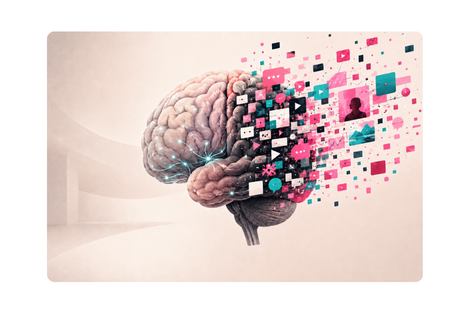
Why can the emotional state of one leader quietly change the behaviour of an entire team?
Stress is often treated as something individual. A heavy workload. Tight deadlines. Pressure that employees are expected to manage privately while continuing to perform. Most workplace conversations around stress focus on resilience, productivity, or finding ways to cope with increasing demands.
But stress rarely stays contained within one person for long.
In teams, emotions are highly social. People constantly observe tone, behaviour, reactions, and emotional signals around them, often without consciously realising it. A leader’s frustration, unpredictability, tension, or calmness can quickly shape how psychologically safe others feel.
This is because leadership behaviour not only influences performance. It influences the emotional climate. And emotional climate shapes behaviour.
Teams Constantly Read Leadership Signals
Humans are highly responsive to social and emotional cues, particularly in environments involving hierarchy and uncertainty.
Long before modern workplaces existed, the brain evolved to assess safety by observing the behaviour of others. Tone of voice, facial expressions, emotional regulation, and predictability all became signals helping people understand whether an environment was safe or threatening.
That process still happens inside organisations today.
Teams are constantly interpreting leadership behaviour, even when nothing is being said directly. A calm response during pressure can create stability. An emotionally reactive response can create tension just as quickly. Importantly, people do not simply respond to pressure itself. They respond to the emotional communication of pressure through leadership behaviour.
Why Leadership Behaviour Has Such a Strong Impact
Leaders often underestimate how much their emotional state influences the people around them. A stressed leader may believe they are simply being efficient, direct, or demanding during difficult periods. But teams rarely experience behaviour as isolated moments. They experience patterns.
A rushed tone can feel like urgency.
Silence can feel like disappointment.
Volatility can feel like danger.
Over time, these patterns begin shaping the emotional environment of the team.
This is why two workplaces with similar workloads can feel psychologically completely different. One team may experience pressure as motivating and manageable, while another experiences the same pressure as emotionally exhausting.
The workload may not be the deciding factor. Leadership behaviour often is.
Stress Intensifies Under Uncertainty
Behavioural science consistently shows that uncertainty increases stress more than difficulty alone.
People can manage demanding situations surprisingly well when expectations feel stable and emotionally safe. What becomes difficult is unpredictability; not knowing how someone will react. Not knowing whether mistakes are safe to discuss. Not knowing whether pressure will escalate into blame, criticism, or emotional volatility.
The brain struggles when it cannot confidently predict outcomes. This is where leadership behaviour becomes particularly influential. Consistency creates emotional stability. Emotional unpredictability creates vigilance.
And vigilance is exhausting.
When people spend more energy monitoring reactions than focusing on meaningful work, stress escalates quickly.
Psychological Safety Changes How Teams Experience Pressure
Pressure itself is not always harmful.
Challenges can create focus, momentum, and growth when people feel psychologically safe. Many teams perform exceptionally well under pressure when trust remains strong and communication stays open.
Psychological safety does not mean removing accountability or avoiding difficult conversations. It means creating an environment where people do not feel emotionally threatened while navigating challenges.
This distinction matters.
When psychological safety exists, pressure tends to feel temporary and manageable. When it disappears, the same pressure can begin to feel deeply personal. People become more cautious. Communication becomes more guarded. Energy shifts away from contribution and toward self-protection. And once self-protection becomes the dominant emotional behaviour within a team, collaboration begins to weaken beneath the surface.
Emotional States Spread Through Teams
One of the most overlooked aspects of leadership is how quickly emotional states spread behaviourally. Calmness spreads. Anxiety spreads. Frustration spreads. Even disengagement spreads.
Humans naturally mirror the emotional tone around them, particularly from authority figures. This happens largely beneath awareness. Teams adapt emotionally to the environments leaders create. A leader who remains emotionally regulated during uncertainty signals stability. A leader who transfers unmanaged stress onto others signals a threat.
Neither response stays isolated for long.
This does not mean leaders must appear emotionless or endlessly composed. In many cases, authenticity strengthens trust. But there is a significant difference between acknowledging pressure honestly and emotionally transmitting unresolved stress throughout a team.
People absorb far more than instructions. They absorb emotional patterns.
Why Some Teams Recover Faster Than Others
Not all teams experience stress in the same way. Some workplaces move through difficult periods and recover quickly. Others remain emotionally tense long after the original pressure has passed. Often, the difference is not resilience at an individual level. It is the emotional environment that leadership creates during periods of stress.
Teams recover more effectively when trust remains intact, when communication stays consistent, and when uncertainty is reduced rather than amplified. When people feel safe raising concerns, asking questions, or acknowledging mistakes without fear of humiliation.
In these environments, pressure moves through the system without becoming psychologically corrosive. But when blame, volatility, or fear dominate leadership behaviour, stress tends to linger. The nervous system remains alert because the environment never fully feels emotionally safe again.
How Leadership Behaviour Affects Employee Performance
Emotional climate is one channel. It is not the only one.
Leadership behaviour also shapes performance directly, through the everyday choices a leader makes about how they manage, motivate, communicate and make decisions. How work is allocated. How feedback is delivered. How mistakes are handled. How much autonomy people are given. These are not soft details. They are the mechanics of management, and they are where performance is quietly won or lost.
This is the part many organisations miss. They track productivity, job satisfaction, employee engagement, morale and employee turnover as if they were separate dashboards. In reality, they are downstream of behaviour. A capable team inside a poorly led organisational culture will underperform a less capable team inside a well-led one. The talent did not change. The conditions did.
The wiring behind this is old. The same brain that evaluates a manager’s tone was shaped in a natural environment where reading the group accurately was a survival skill, not a soft one. The office simply inherited that machinery.
So the more useful question is not “how hard is this team working?” It is “what is leadership behaviour doing to their capacity to perform?”
Leadership Style Is a Pattern of Behaviour, Not a Personality
We tend to talk about leadership style as if it were personality. It is not. Style is a pattern of behaviour, and behaviour can be observed, learned and changed.
The foundational work here belongs to Kurt Lewin, whose research within early leadership studies identified three broad styles: autocratic, democratic and laissez-faire. The autocratic leader concentrates control and decision-making at the top. The laissez-faire leader steps back and largely leaves people to it. The democratic leader involves the team in decisions while still holding direction.
Decades of research have built on that foundation. Transactional leadership runs on exchange – targets, incentives, reward for compliance. Transformational leadership works through meaning, vision and development, lifting performance by changing how people see their own potential. Strategic leadership connects daily behaviour to longer-term strategy, so that today’s decisions still make sense against tomorrow’s direction.
None of these is universally right. Context matters. But two patterns reliably erode performance regardless of context: authoritarianism that removes autonomy, and micromanagement that signals distrust. Both tell the brain the same thing; your judgement is not safe here. And a brain braced for correction does not innovate, problem-solve, or take the small risks that good work quietly depends on.
The Everyday Behaviours That Move Performance
If style is the pattern, these are the brushstrokes.
Feedback is the most underused performance tool a leader has. Not annual review feedback. Ordinary, timely, specific feedback delivered through genuine dialogue rather than monologue. The behaviours that support it are unglamorous: active listening, empathy, asking before telling, and praise that is specific enough to function as reinforcement rather than noise. People repeat what gets noticed.
Then there is how leaders build capability. Mentorship, training and development, and deliberate leadership development are not perks. They build the skill, knowledge and confidence a team draws on under pressure. They also signal something the brain reads clearly: you are worth investing in.
And there is how leaders distribute ownership. Accountability and autonomy are not opposites. The strongest teams hold both. Clear ownership of outcomes, paired with genuine empowerment to decide how. Add fair incentives, sensible conflict resolution, and a shared goal orientation, and you create the conditions for teamwork, adaptability and innovation rather than mere compliance. Information moves. Problems get raised early. Problem-solving becomes a group habit. Experience compounds instead of leaking out the door.
What Has Changed: The Right to Disconnect
Here is something that was not part of this conversation a few years ago.
In Australia, leadership behaviour around availability now has a legal boundary. Under amendments to the Fair Work Act, the right to disconnect gives employees the right to refuse to monitor, read or respond to work-related contact outside their working hours, unless that refusal is unreasonable. It applied to larger employers from 26 August 2024, and extended to small business employers (those with fewer than 15 employees) from 26 August 2025.
It is not a ban on after-hours contact, and it is worth being precise about that. It does not stop a leader sending a message at 9pm. It changes whether the team is expected to respond. The contact can still happen. The obligation to be permanently reachable does not.
This matters far more behaviourally than it looks on paper, and it connects directly to everything above about uncertainty. An always-on culture keeps the nervous system in a low-grade state of vigilance. The same vigilance that subtly drains performance. When people cannot predict whether the evening, the weekend or the holiday will be interrupted, they never fully recover. The work keeps running in the background of thought even when the laptop is closed.
The legislation does something a values statement cannot. It resets the social norm. It moves “responsiveness at all hours” from an unspoken expectation to a written policy with a boundary. But the law only sets the floor. The behaviour still belongs to leadership. A leader who messages late and genuinely means “this can wait until Monday” has to make that explicit, because the brain does not read intentions. It reads signals, and an unanswered-but-expected message reads as pressure.
This is where transparency does the heavy lifting. The teams adapting well to the right to disconnect are the ones having an honest dialogue about expectations. When contact is genuinely urgent, when it is not, and what “reasonable” looks like inside their particular employment context. That clarity reduces uncertainty, which is precisely what protects both wellbeing and performance.
There is a commercial argument here too, not only a compliance one. Sustainability of performance is not the same as maximum hours. A team that recovers performs again tomorrow. A team that never switches off degrades – slower thinking, more errors, weaker decisions, higher employee turnover. Handled well, the right to disconnect is not a constraint on performance. It is a structure that protects it.
What Drives Performance From the Inside
Leadership behaviour shapes the environment. But performance is also driven by what happens inside the individual. The science here is worth understanding.
Motivation is not one thing. Decades of research, including David McClelland’s work using the Thematic Apperception Test to surface people’s underlying motives, points to different drivers such as achievement, affiliation, and power operating beneath the surface of behaviour. Leaders who assume everyone is moved by the same incentive routinely misread their teams.
Two related concepts matter enormously. The first is locus of control: whether a person believes outcomes are driven by their own actions (internal) or by forces beyond them (external). The second is attribution – how people explain why things happened. Neither is a fixed personality fact. Both are shaped, in part, by leadership behaviour. A leader who meets setbacks with blame trains an external, defensive attribution style. A leader who treats setbacks as information trains the opposite pattern of thought: ownership, learning, and genuine psychological resilience.
This is also where bias enters. Leaders are not neutral observers of performance. Attribution bias means we tend to credit our own results to skill and others’ to circumstance – or the reverse, depending on who we are judging. Naming that tendency through honest self-reflection is one of the most useful behaviours a leader can practise, because the attitude a leader brings to evaluation shapes the confidence and goal orientation of everyone they assess.
Integrity Is a Performance Variable
It is tempting to file integrity under values rather than performance. That is a mistake.
Trust is built behaviourally, through small repeated signals of honesty, consistency and follow-through. When a leader’s words and actions match, credibility accumulates. When they do not, the team insidiously recalibrates – saying less, risking less, protecting themselves. Ethics, in other words, is not separate from commercial outcomes. It is one of the inputs. A leader with integrity lowers the cognitive cost of working for them, and a brain that is not busy managing distrust has more capacity left for the actual work.
Leadership Behaviour Is a Skill, Not a Slogan
None of this is about charisma, personality or being liked. Leadership behaviour is a skill. A set of observable patterns that can be developed through honest self-reflection, good feedback and deliberate leadership development.
The most effective leaders treat behaviour as a tool, not a trait. They understand that a clear story can align a team faster than a spreadsheet, which is why storytelling remains one of the most powerful concepts in leadership communication. They understand that culture is built in small moments, not on the company values page. And they understand that how they behave under uncertainty is the single clearest signal their team will ever read.
The Hidden Influence of Leadership
Leaders cannot eliminate stress entirely. Nor should they.
Pressure, challenge, and uncertainty are unavoidable parts of modern work. But leadership behaviour plays a significant role in determining whether stress becomes productive momentum or emotional exhaustion. This influence is often quieter than people realise.
It appears consistent.
Emotional regulation.
Predictability.
Communication.
The ability to create stability during uncertain moments. People do not respond only to what leaders say; they respond to how leaders make environments feel.
What This Reveals About Human Behaviour
Stress is rarely experienced individually for long. Humans are deeply responsive to emotional environments, especially in situations involving hierarchy, uncertainty, and social evaluation. Leadership behaviour constantly shapes those environments, influencing how safe, focused, and emotionally regulated teams feel.
This is why leadership has such a powerful behavioural impact. Not simply because leaders influence outcomes. But because they influence the emotional climate. And emotional climate shapes behaviour.
Because in the end, people may forget periods of pressure, but they rarely forget how leadership made them feel while they were under it.
Citations:
Lewin, K., Lippitt, R., & White, R. K. (1939). Patterns of Aggressive Behavior in Experimentally Created “Social Climates.” The Journal of Social Psychology, 10(2), 269–299. https://doi.org/10.1080/00224545.1939.9713366
McClelland, D. C. (2020). The achievement motive. Barakaldo Books. https://books.google.com/books?hl=en&lr=&id=YNSREQAAQBAJ&oi=fnd&pg=PT5&ots=pLJySCc47v&sig=FwJdFejDhWOFecm66BHdv4h79gw