When it comes to buying decisions, most of us believe we are rational. We examine features, compare costs, and select the best option based on logic. Or so we think.
In reality, pricing is rarely about the number on the tag. It is about perception, trust, and the story that the number tells. In a noisy marketplace, what a customer is willing to pay is shaped far more by how a product feels than by what it costs.
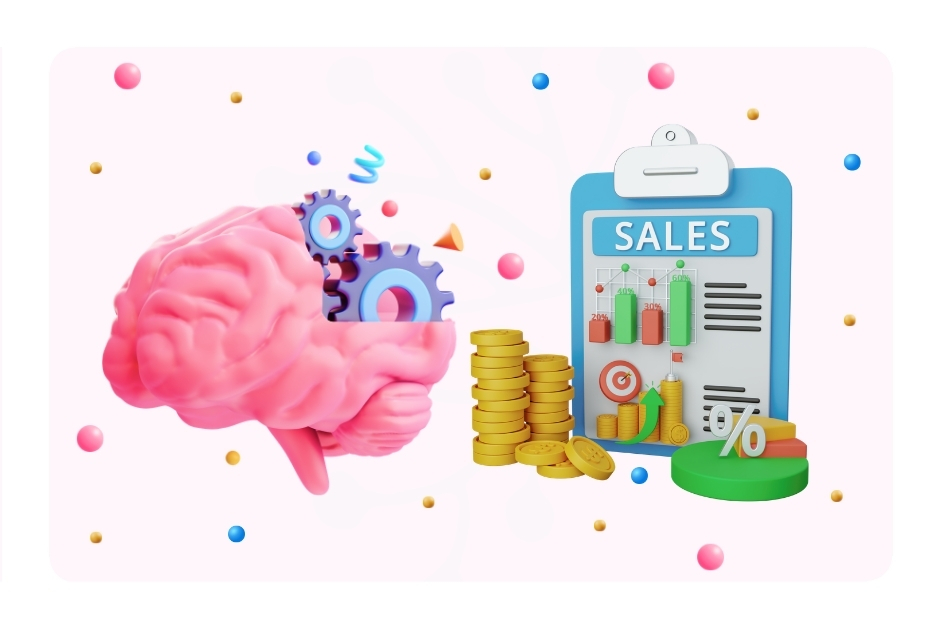
Understanding the psychology of pricing products is not a marketing trick. It is a leadership tool, a brand signal, and a strategic advantage that separates thriving businesses from those stuck in a race to the bottom.
Why Product Pricing is Emotional, Not Rational
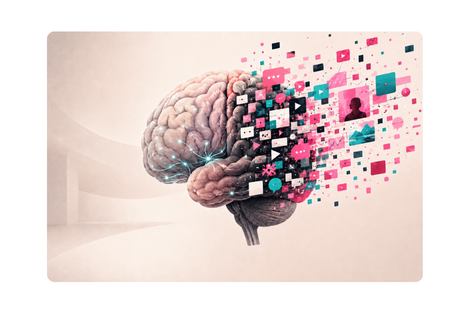
At first glance, pricing appears to be a numbers game. But neuroscience tells a different story.
Research in behavioural economics and cognitive neuroscience shows that people rely on mental shortcuts when evaluating prices. These cognitive shortcuts, known as heuristics, allow the brain to make quick decisions without expending energy on complex analysis. When it comes to pricing, this means we rarely calculate value objectively. We feel it.
Functional MRI studies have revealed that seeing a price tag activates the insula, a brain region associated with pain and negative emotion. Neuroscientists refer to this as the “pain of paying.” The higher the perceived cost relative to expected reward, the stronger this neural pain response becomes. It is the brain’s way of asking: “Is this worth it?”
Think about ordering dinner at a restaurant. A $24 pasta dish seems perfectly reasonable until you see the same pasta at the supermarket for $8. The ingredients haven’t changed, but the context has. Pricing is never evaluated in isolation. It is always compared, framed, and interpreted through emotion.
This is why two people can look at the same price and reach completely different conclusions. It is not about logic. It is about perception.
Price Anchoring and Framing: How the Brain Sets Value
One of the most powerful principles in the psychology of pricing products is anchoring. First described by psychologists Amos Tversky and Daniel Kahneman in a 1974 research paper, anchoring occurs when the first number we encounter serves as a mental reference point for everything that follows.
If a website displays a $900 premium coaching package alongside a $399 standard option, the brain registers the second as “reasonable” even if you were only planning to spend $200. That $900 acted as an anchor, pulling expectations upward and reframing what “expensive” means in this context.
Closely linked to anchoring is framing. A price framed as “only $1.90 per day” feels more palatable than $695 per year, even though it’s the same amount. When marketers break down costs into smaller units or emphasise savings rather than total expenditure, they are tapping into how the brain naturally processes value.
Behavioural economist Dan Ariely demonstrated this visually during a 2008 Ted Talk where he discusses The Economist subscription pricing, and his subsequent experiment with MIT students. When readers were offered two options (online only at $59 or print and online at $125), most chose the cheaper option. But when a third option was added (print only at $125, the same price as the bundle), the majority shifted to the combined package. The middle option made the bundle look like an outstanding value by comparison.
This is the decoy effect in action, revealing something important about pricing psychology. Customers do not assess value in absolute terms. They assess it relative to whatever else is in front of them.
Charm Pricing and the Left-Digit Bias
One of the most researched phenomena in pricing psychology is charm pricing: setting a price just below a round number, such as $9.99 instead of $10 or $49.95 instead of $50.
This works because of what researchers call the left-digit bias. Our brains process numbers from left to right, and we tend to anchor on the first digit we see. So $9.99 registers closer to $9 than to $10, even though the difference is only one cent. In his book, Priceless: The Myth of Fair Value, William Poundstone discusses how this technique can increase conversions by as much as 24 percent in some retail categories.
However, charm pricing is not always the right choice. Research from INSEAD and Nanyang Technological University found that round numbers feel more natural for emotion-driven purchases, making them a stronger choice for premium and luxury positioning (Wadhwa & Zhang, 2015).
Round prices feel more fluent and less “calculated,” which aligns with the emotional buying patterns associated with prestige purchases. A high-end restaurant prices a dish at $40, not $39.99, because precision undermines the perception of exclusivity.
The takeaway for business leaders is that the pricing format communicates brand positioning. Charm pricing signals value. Round pricing signals quality. The format you choose should align with the story your brand is telling.
Loss Aversion: Why Losing Hurts More Than Gaining
Prospect theory, developed by Kahneman and Tversky, established that people feel the pain of a loss roughly twice as intensely as the pleasure of an equivalent gain. This principle, known as loss aversion, has profound implications for how businesses price products and communicate value.
In practice, this means framing matters. “Don’t miss out on $100 in savings” is psychologically more compelling than “Save $100.” The first statement triggers the brain’s loss-avoidance system. The second is a rational appeal to benefit.
Loss aversion also explains why money-back guarantees and free trial periods are so effective. They reduce the perceived risk of purchase by eliminating the potential for loss. When a customer knows they can reverse the decision, the pain of paying diminishes and the likelihood of conversion increases.
For service-based businesses, this is powerful. Offering a satisfaction guarantee or a complimentary consultation removes the psychological barriers that prevent potential clients from taking the first step.
The Decoy Effect: Guiding Choice Through Strategic Comparison
The decoy effect (also known as asymmetric dominance) is one of the most effective pricing psychology strategies available to businesses selling products at multiple price points.
It works by introducing a third option that most people will not choose. It exists to make one of the other options look significantly more attractive. The decoy is priced close to the target option but offers noticeably less value, making the target appear to be the smarter choice.
You have likely experienced this yourself. You are choosing between flights. One fare is cheap, another is significantly more expensive, and a third, only slightly above the cheapest, offers noticeably more comfort. Suddenly, that middle option feels like the smart, balanced choice. The expensive fare is not there to sell. It is there to make the mid-tier option look like an outstanding value by comparison.
This strategy works because human brains are wired to consider options proportionally. We do not calculate the intrinsic worth of each tier independently. We compare them against one another and gravitate toward the option that feels like the best deal within that comparison set.
Tiered pricing structures built on this principle consistently outperform single-option pricing. They give customers a sense of control while gently steering them toward the offering that delivers the most value for both buyer and seller. My post on the psychology of paying covers this in greater detail.
The Risk of Discounting Your Price
When business slows down or competitors start undercutting, the natural temptation is to offer discounts. While limited-time offers can work, relying too heavily on price reductions can compromise long-term brand value and erode customer trust.
The reason comes back to anchoring. If your $150 service is regularly discounted to $99, the real price customers hold in their mind is $99. They anchor to the lower number. Over time, the full price feels inflated, even unfair. Customers begin to wonder: Is this worth the full amount? Should I just wait for the next sale? Am I overpaying if I buy now?
Frequent discounting also triggers what psychologists call the reference price effect. Every promotion resets what customers consider “normal” pricing. Once that reference point drops, it becomes very difficult to bring it back up without losing customers.
Smart pricing focuses on increasing perceived value rather than reducing perceived cost. The goal is to make the customer feel the offer is worth every cent, not that they are getting it for less than they should. Adding value through bonuses, exclusivity, or enhanced service is almost always more effective than cutting the price.
There is a line between strategic pricing and manipulation. When discounting strategies cross into dark patterns in marketing, such as fake urgency, inflated original prices, or hidden conditions, they fail to build value and actively destroy trust. Understanding where that line sits is essential for any business that wants long-term customer loyalty.
Perceived Value: The Real Driver of Pricing Power
Perceived value is the engine behind every pricing decision. It is what determines whether a $20 T-shirt feels expensive or like a bargain. It is why someone will pay $6 for a coffee in one café but not in another.
Customers do not just pay for products. They pay for service, stories, experiences, convenience, and peace of mind. The brand narrative, the packaging, the experience, and the social proof surrounding a product all contribute to how valuable it feels before a single feature is evaluated.
This is especially true in service businesses. When someone hires a consultant, coach, or advisor, they are not buying time. They are buying insight, transformation, clarity, and results. The price reflects their belief in what they are going to receive and how much they trust you to deliver it.
Price bundling is another way to amplify perceived value. Grouping products or services together into a package creates the impression of a deal, even when the individual components would cost the same or less purchased separately. Bundling works because it simplifies the decision and reduces the number of individual pain-of-paying moments the customer experiences.
The most successful brands do not compete on price. They build strong, clear narratives around what their product or service is worth. And they stand by it.
Trust as a Pricing Strategy
Price communicates far more than affordability. It signals trust, quality, and confidence.
In behavioural economics, pricing is considered a signal. A low price can suggest accessibility, but it can also raise doubts. When something seems too cheap, we instinctively question its quality. This is the price–quality heuristic at work: the brain uses price as a proxy for value when other information is limited.
On the other hand, a well-justified higher price can enhance credibility. When positioned with clarity and consistency, premium pricing communicates: “We know our worth, and you can trust that you are in expert hands.”
Transparency strengthens this signal. When businesses explain what drives their pricing (the quality of materials, the expertise behind the service, the rigour of the process) customers respond with greater confidence. Research from Harvard Business School shows that pricing transparency increases willingness to pay, particularly in service industries where the deliverable is intangible.
This is not about charging more for the sake of it. It is about aligning price with brand, message, and promise. Customers are not just buying the outcome. They are buying the experience and the confidence behind it.
Applying Pricing Psychology to Your Business
Whether you sell products, services, or experiences, pricing should be a strategic decision. Here is how to put these principles to work.
- If your offer delivers genuine value, stand behind your pricing with confidence. Hesitation in pricing communicates hesitation in capability.
Frame the offer, not just the figure. Communicate the transformation, convenience, or peace of mind that comes with your offer. Make the value visible before the price is ever seen. - Offer an entry-level option, a mid-tier option with substantial value, and a premium package. A tiered pricing structure uses the decoy effect to nudge customers toward your ideal offering.
- Instead of cutting prices, explore ways to add value: bonuses, exclusivity, faster delivery, extended support, or personalised service.
- Charm pricing ($49.99) works for value-positioned products. Round pricing ($50) works for premium positioning. Match the format to the brand.
- Satisfaction guarantees, free consultations, and transparent pricing all lower the psychological barriers to purchase by addressing loss aversion.
- Pricing is never fixed. Use A/B testing, customer feedback, and behavioural data to continuously improve your approach.
Smart pricing is not about tricking customers. It is about understanding how the brain makes decisions and building a strategy that resonates with both logic and emotion.
The businesses that win in the long term are not the ones offering the cheapest price. They are the ones providing the clearest value.
Because at the end of the day, the psychology of pricing products is not about the number on the tag. It is about the perception of worth.
Want to Learn More About the Psychology of Pricing?
Dr Leanne Elich works with businesses to develop pricing and sales strategies grounded in neuroscience and behavioural psychology. If you want to stop competing on price and start competing on value, get in touch to explore how a psychology-driven approach can transform your results.
Citations:
Tversky A, Kahneman D. Judgment under Uncertainty: Heuristics and Biases. Science. 1974 Sep 27;185(4157):1124-31. https://www.science.org/doi/10.1126/science.185.4157.1124
PMID: 17835457.
Wadhwa, Monica & Zhang, Kuangjie. (2015). This Number Just Feels Right: The Impact of Roundedness of Price Numbers on Product Evaluations. Journal of Consumer Research. 41. 1172-1185. https://doi.org/10.1086/678484.