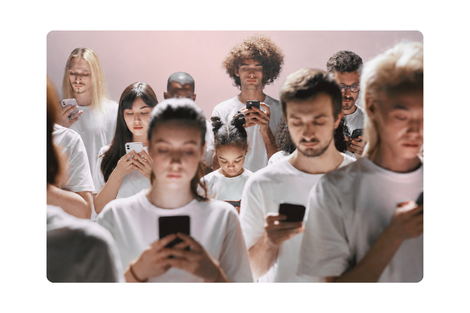
When was the last time you consciously decided to keep scrolling?
You open Instagram. You watch a video. You keep going.
Chances are, you didn’t.
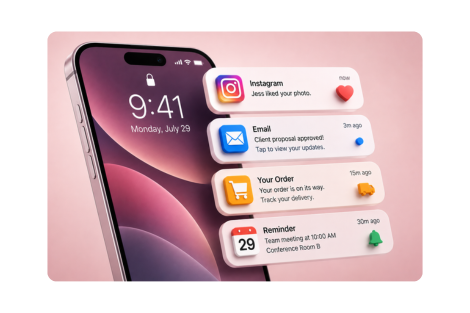
There was simply another post waiting. Then another. The next video started automatically, and at some point a notification gave you a reason to come back.
That’s what makes the line between persuasion and manipulation so interesting. We like to think influence happens when someone actively convinces us to do something. But some of the most powerful forms of influence don’t tell us what to do at all. They change the environment in which we make the decision.
The Decisions We Don’t Realise We’re Making
A major court case currently unfolding in the United States has put that idea under an unusual amount of scrutiny. A coalition of US states alleges that Meta deliberately designed features on Facebook and Instagram to encourage young people to spend more time on its platforms. Among the features being challenged are infinite scroll, autoplay, notifications and public likes.
Meta disputes the allegations and argues that it has invested heavily in protecting young users. Whatever the court ultimately decides, the case raises a much bigger behavioural question.
When does making something easy become making it difficult to resist?
Take infinite scroll. Before it existed, reaching the bottom of a page created a natural stopping point. You had to make another decision: click to the next page or leave. Infinite scroll removed that decision. There is no bottom. No next button. No obvious moment asking whether you still want to be there. You haven’t been forced to continue. You haven’t been asked to stop.
Friction Isn’t Always the Enemy
For years, businesses have been taught to remove friction. Make checkout faster. Reduce the number of clicks. Simplify the form. Remove unnecessary decisions. And often, that’s excellent advice. If someone wants to buy a product and has to navigate six confusing pages to do it, friction isn’t helping anyone. But behavioural science reveals another side to friction.
Sometimes friction gives us a moment to think.
Netflix asking whether you’re still watching creates a decision point. A spending app asking you to confirm a large transaction creates a pause. A platform asking whether you really want to share something can interrupt an impulsive response.
The extra step might be inconvenient. It can also be useful. When we remove every pause from an experience, we don’t just make behaviour easier. We can make it more automatic. And automatic behaviour requires far less conscious thought.
The Environment is Part of the Decision
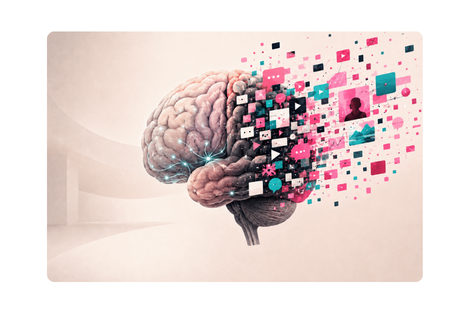
We like to imagine decisions happen inside our heads. I want this. I choose that. I prefer this option. But decisions don’t happen in isolation. They happen inside environments.
A supermarket decides which products sit at eye level. A website decides which button is largest. A subscription service decides which option is preselected. An app decides whether another video waits for you or starts automatically. None of those decisions technically removes your freedom to choose. But they change the architecture around the choice.
Behavioural scientists call this choice architecture: the way options are presented influences what people are likely to do. And once you notice it, you start seeing it everywhere.
The question isn’t simply, “Did I choose this?” It’s also, “What made this particular choice so easy to make?”
Defaults Are More Powerful Than They Look
Imagine signing up for a service and seeing a box that says:
“Send me weekly updates.”
If the box is empty, you need to actively opt in. If it’s already ticked, you need to actively opt out. The choice hasn’t disappeared. You can still say yes or no. But the behaviour changes dramatically because one option requires action and the other requires nothing.
That’s the power of a default.
We tend to stick with whatever has already been selected for us, especially when the decision feels small or changing it requires extra effort. Autoplay works in much the same way. The default isn’t stop. The default is continue. You can still leave. But leaving is now the behaviour that requires a decision.
So Where Does Persuasion Become Manipulation?
This is where things become less comfortable because behavioural design itself isn’t inherently bad. The same principles can encourage someone to save more money, take medication on time, exercise regularly or complete a course they’ve been putting off.
A reminder can distract you from work. It can also remind you to call your mother.
A default can keep you watching videos longer than you intended. It can also automatically enrol employees into a retirement savings program they may otherwise have ignored. The psychology hasn’t changed. The intention has. And perhaps that’s where the more useful distinction lies. Instead of asking whether behavioural influence is good or bad, we might ask:
Whose goal is the design helping us achieve?
If a product makes it easier for me to do something I already want to do, persuasion can feel helpful. If it deliberately makes it harder for me to stop doing something that primarily benefits someone else, the line becomes much less clear.
Good Design Doesn’t Have to Remove Every Decision
Modern design is obsessed with making everything seamless.
One click. One tap. No interruption. No friction.
But perhaps seamless shouldn’t always be the goal. Sometimes the most responsible design choice is to put a decision back in.
Are you still watching?
Do you want to continue?
Are you sure?
Those tiny moments create something increasingly rare in digital experiences: a pause between impulse and action. And that pause gives conscious thought a chance to catch up.
The Choices We Make Are Never Entirely About the Choice
The Meta case will ultimately be decided on legal questions far more complex than whether infinite scroll is persuasive. But the debate surrounding it exposes something worth noticing about human behaviour.
We make thousands of decisions every day inside environments somebody else has designed.
The button has a colour.
The options have an order.
Something is selected by default.
The next video either waits for us or begins automatically.
There may be a natural stopping point, or there may be no stopping point at all. None of these things forces us to make a particular choice. But they can quietly change which choice requires the least effort. And perhaps that’s the behavioural blind spot.
We spend a lot of time asking whether people are free to choose. We spend much less time asking who designed the choices they were given. Because the most powerful persuasion doesn’t always convince us to do something; sometimes it simply makes one behaviour easier to accept without question.