When was the last time you did absolutely nothing?
Not watched television while checking your phone. Not listened to a podcast while walking. Not scrolled through Instagram while waiting for your coffee.
Nothing.
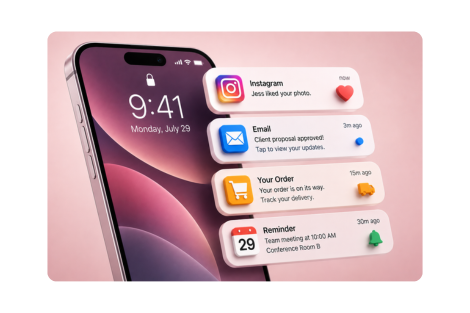
For most of us, those moments have become surprisingly rare. A friend is five minutes late, and we pull out our phone. The lift takes too long, and we check our messages. We stand in a queue and, almost without thinking, find something to read, watch or scroll through.
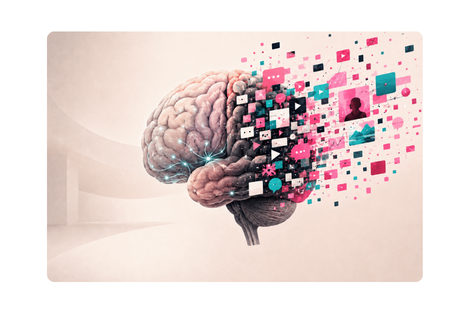
We tell ourselves we’re just passing the time. But perhaps something more interesting has happened. We’ve become so good at eliminating boredom that we’ve barely noticed what we’ve eliminated with it.
We Used to Have Gaps in Our Days
Think about what waiting looked like twenty years ago.
If someone was late to meet you, you waited.
If you were sitting on a train, you looked out the window.
If you arrived early for an appointment, you might have ten minutes with nothing in particular to do.
These weren’t significant parts of the day. They were tiny gaps between everything else. But those gaps existed. Now almost every one of them can be filled. We carry entertainment, conversation, news, work, shopping and information in our pockets. The moment our environment stops giving us something to pay attention to, we can replace it with something else. And we’ve become remarkably quick at doing it.
The interesting question isn’t why our phones are so entertaining; it’s why the alternative has started to feel so uncomfortable.
Boredom Has Become a Problem to Solve
Boredom is an unpleasant feeling. That’s partly what makes it useful. It tells us that whatever we’re doing isn’t engaging enough and motivates us to look for something else. Until relatively recently, finding that “something else” usually required a little more effort.
You might start a conversation. Go for a walk. Pick up a book. Think about something you’ve been avoiding. Notice what’s happening around you. Or you might remain bored for a while. Today, the solution requires almost nothing. A few seconds of discomfort appear and our thumb moves.
The behaviour becomes so automatic that we often don’t consciously decide to check anything. We notice that we’re already doing it. And every time we immediately remove that discomfort, we learn something. Boredom appears. Stimulation makes it disappear. Repeat that often enough and reaching for stimulation starts to become the default response.
The Problem With Filling Every Gap
We tend to think of boredom as empty time. Nothing is happening, so why not fill it? But the brain isn’t necessarily doing nothing simply because we aren’t consuming something. When an immediate task doesn’t occupy our attention, our thoughts can wander. We replay conversations. Make connections. Think about the future. Remember something we forgot. Notice an idea that hadn’t surfaced while we were concentrating on something else.
Sometimes those thoughts are useful. Sometimes they’re completely pointless. That’s part of it too. Not every minute of our lives needs to produce something. Yet we’ve gradually created an environment where almost every quiet moment can be replaced with input.
And that changes the question.
It isn’t simply “What are we gaining from all this stimulation?” It’s also “What no longer has the chance to happen because of it?”
We’ve Confused Stimulation With Rest
This becomes even more interesting when we think about how we relax.
You’ve finished work. You’re exhausted. You sit on the sofa and open your phone. It feels like a break. But your brain is still receiving information. A video. A message. A headline. A photograph. Another video. Someone’s opinion. An advertisement. Another message.
None of it feels particularly demanding because you aren’t actively working. But you’re still processing. We’ve become very good at switching from one form of stimulation to another and calling the second one rest. The difference between work and downtime used to be partly about what demanded our attention. Now downtime can demand just as much attention. It simply asks for it in a more entertaining way.
Why Doing Nothing Can Start to Feel Wrong
When constant stimulation becomes normal, its absence can start to feel strange. Silence feels too quiet. Waiting feels too slow. A walk without headphones feels as though something is missing. What changed wasn’t the experience itself. Our baseline for stimulation changed. And that matters because behaviours become easier when they’re familiar.
If every spare moment is filled, then an unfilled moment becomes unusual. We notice it. We feel the urge to change it. What once looked like ordinary waiting starts to feel like wasted time.
This Isn’t Really About Giving Up Your Phone
It’s easy to turn this conversation into an argument about digital detoxes. Delete the apps. Turn off the phone. Disconnect from the internet. I don’t think that’s particularly useful.
Technology isn’t the problem simply because it’s available, and stimulation isn’t inherently bad. Our phones allow us to learn, work, communicate and access things that would have been unimaginable not very long ago.
The more interesting question is whether we’re still choosing when to use that stimulation. Or whether we’ve stopped noticing the moments when we don’t need it. There’s a difference between opening your phone because you want to do something and opening it because nothing else is happening.
One is a choice. The other can become a reflex.
Maybe We Need to Stop Treating Boredom as a Failure
We optimise so much of our lives around removing unnecessary waiting. Faster internet. Same-day delivery. Instant responses. Entertainment on demand. And much of that is genuinely useful.
But perhaps not every empty moment needs optimisation. Maybe waiting for your coffee can simply be waiting for your coffee. Maybe walking somewhere doesn’t require a podcast. Maybe five minutes before a meeting doesn’t need to become five minutes of email.
Not because boredom is somehow virtuous. But because constantly escaping it may be teaching us that every moment without stimulation is a problem. And it isn’t.
The Moments We Keep Filling
The next time you find yourself waiting for something, notice what happens. Not after ten minutes. After ten seconds. Notice how quickly your hand reaches for your phone. Notice whether you made a conscious decision to check it, or whether the movement seemed to happen before the decision.
Then, perhaps, don’t do anything about it. Let the moment remain unfilled. See where your mind goes when nothing else is telling it where to look. Because we think we’re filling empty moments. But those moments may never have been empty.